

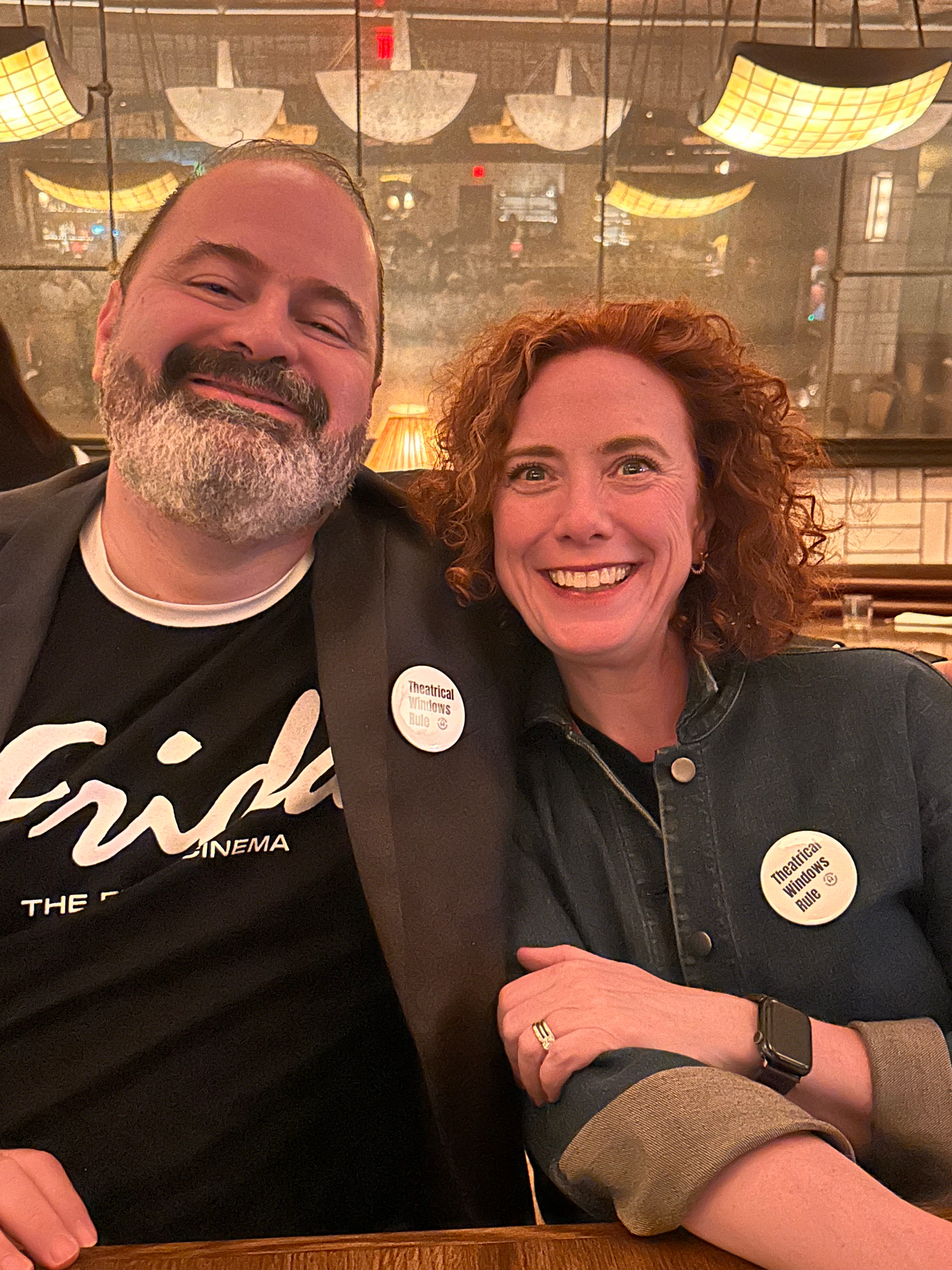
While our friend Richard Rushfield was the talk of the town (in what is now dubbed “pin gate”by Elaine Low at The Ankler ) at CinemaCon, and AMC’s chief was praising the WBD/Paramount merger, our dear friends to the North were celebrating National Canadian Film Day, presented by Reel Canada whose mission is to introduce audiences to the power and diversity of Canadian film, and engage them in a conversation about what it means to be Canadian. (Must be nice!) Check out their 2026 Canadian film lineup.


One of our favorite Canadian partners is NICE, the Network of Independent Canadian Exhibitors, an alliance of Canadian independent cinemas, festivals, and professional programmers. At AHC, we work closely with them to share information (about topics like the merger and it’s worldwide effects), data and membership perks, and to further connect the community of global indie exhibitors. So in celebration of the great work that they do, and in honor of Canadian Film Day, we’re sharing an excerpt from a sit down with AHC’s Program Manager Colton Campbell and NICE’s Executive Director Sonya Yokota William, who has been in the role since the organization’s official incorporation in 2022
Read on to learn more; and keep scrolling for Part 2 of our Best Practices for Filmmakers booking their films in cinemas. And, don’t forget to take action at #BlockTheMerger.
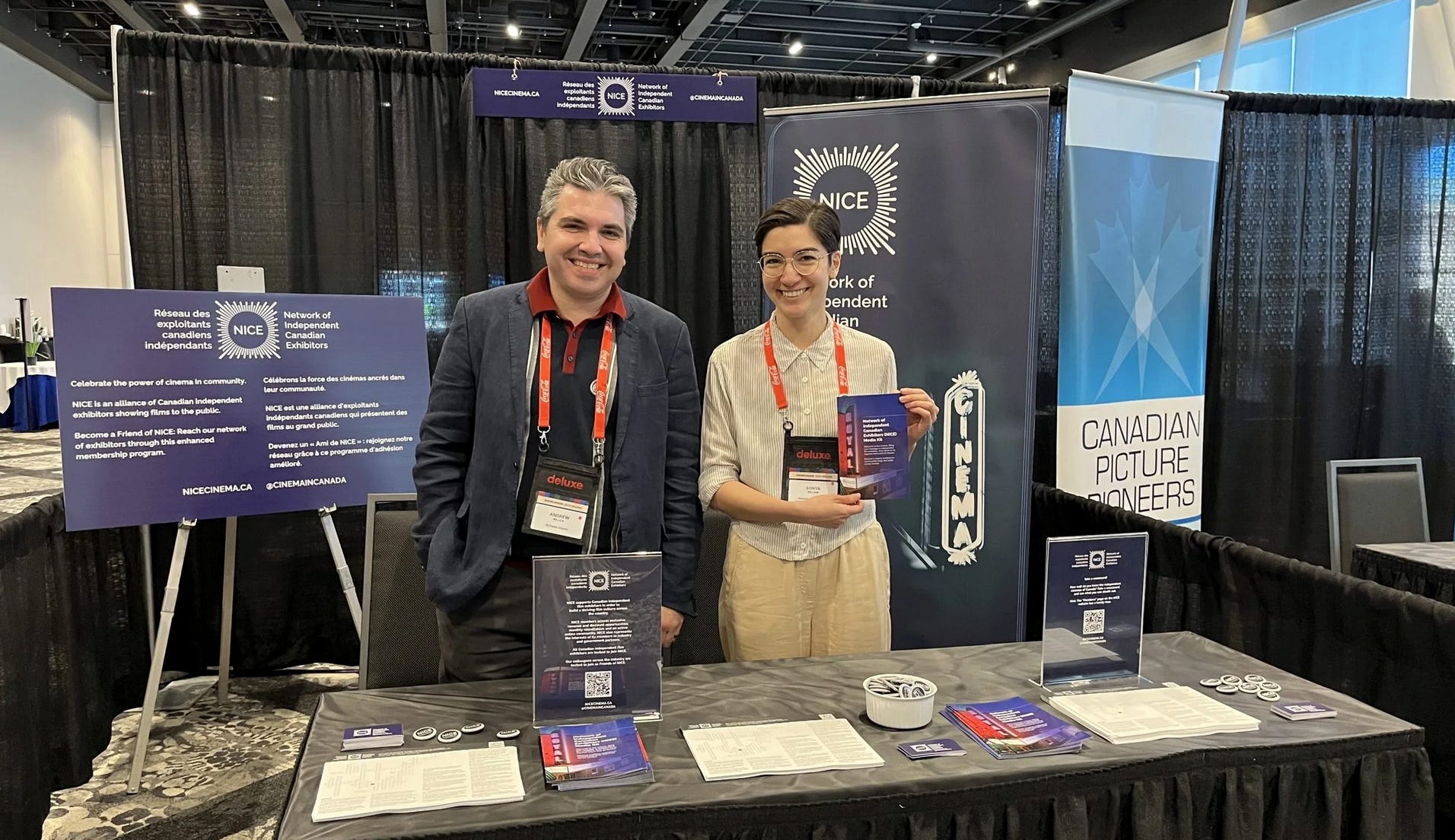
Last April, AHC’s Program Manager Colton Campbell spoke with Sonya Yokota William, Director of the Network of Independent Canadian Exhibitors (NICE) who has been in the role since the organization’s official incorporation in 2022. NICE is an alliance of Canadian independent cinemas, festivals, and professional programmers.
What do you enjoy most about being the organization helping these cinemas survive and thrive across Canada?
NICE is such a special community. I think even beyond loving the work itself—the work of popping corn and putting films on the big screen—NICE has the luck of being fairly new and grassroots. Our members are really invested. Canada has some really special independent cinemas. We feature one every month with our Member of the Month feature. Check them out!
What are some challenges you or Canadian cinemas as a group may have had to overcome and what about that makes you hopeful for the next set of years to come?
Independent cinemas have always faced a changing marketplace, from broadcast television to home video and beyond. The fact that they have survived and thrived through the decades is a testament to their importance! They are beloved by their communities and audiences, and serve as springboards for all sorts of careers.
Since our inception, NICE has focused on fair access to film. In a report we published in 2024, we discovered that 53% of our members must wait until a local Cineplex has finished showing a film before they are allowed to screen it. Additionally, 81% of our members are impacted by “clean runs”—the full shows requirements from major studios.
These policies limit our members’ ability to serve their audiences. Who wouldn’t want a local cinema with a vibrant calendar: family matinee, new buzzworthy blockbuster in the 7:00pm slot, and fun genre film at 9:00pm? Independent cinemas understand their audiences and want to sell as many tickets as possible. We firmly believe that greater freedom and fair access to film would create a better market for everyone.
What are some of your favorite art house experiences in Canada or even in some places within the AHC community?
I have a special fondness for the cinemas where I’ve worked over the years: The Cinematheque in Vancouver, and TIFF Lightbox, Hot Docs Cinema, and Paradise Theatre in Toronto. One of my formative film-loving memories is watching Pierrot le Fou at The Cinematheque when I was a teenager. It may sound pretentious, but it’s true! That experience came at the perfect moment in my life and showed me what going to the movies could truly be.
For more information on Sonya and NICE’s work, please visit www.nicecinema.ca.
Booking Your Film in an Art House: Best Practices, Part 2
ICYMI, check out Part 1 of our Best Practices here:

And here’s Part 2, focusing on what to do once you’ve booked.
Filmmaker Involvement
Let the theater know if your creative team will be available and willing to participate in promotion including:
Pre-screening social media and media interviews
Creation of a personalized pre-recorded introduction
In-person (if applicable) and virtual Q&As, and community outreach
Additional tips:
Don’t just limit it to the director – moviegoers are also curious about the other crafts.
Try to customize your interactions as much as possible – for example, if you send along a film intro video, thank the theater by name in the video. Audiences love to feel more directly connected to you as the filmmaker.
If no one from the team is available to participate, have a list of folks or types of folks who would be good to lead a post-screening Q&A, should the theater be interested in this.
It’s important to keep in mind that many independent exhibitors run much like an indie film does - on a shoestring budget and without a lot of staff. Sometimes the only marketing they can do on your behalf is a newsletter or social media story (with many films/day to promote), so a successful screening often relies on the film team’s hard push on marketing and PR.
Community Outreach
Do as much outreach on your own in the community where you are screening as you can, whether through direct asks or social media. This can make your screening much more vibrant by increasing attendance. When doing so, be sure to coordinate with the theater; they may have contacts but not the bandwidth to do the outreach, and that would be a perfect place for you to step in. A targeted paid media spend on Facebook or Instagram can be a good bang for your buck; you don’t need to spend a lot! When coordinating with the theater, ask what social media channels they have the most traction on, this way you know you are spending your money in a social space that is reaching their audience.
It’s also best practice to engage some of your own local, regional, or national community partners, many of which you’ve likely already connected with through your festival run.
Box Office
If you book the film directly with the theater, you may reach out for a Box Office Report (BOR) the following week. If you want a BOR and you booked your film with a flat fee, you will likely have to explicitly request one: most distributors don’t require a BOR for films book with a flat fee, so exhibitors are unlikely to send one without being explicitly asked.
In your BOR you can expect to receive:
Number of tickets sold
Total box office gross (even if you are paid a flat fee)
Breakdown of tickets sold (member v. non-member, student v. adult v. senior). This will give you some insight into who showed up and some demographic information.
Payment
Make sure you have an easy way to get paid! For example, you can create and send invoices in Paypal for free. Definitely have your invoice template at the ready (and likely a W9, too). Allow a few weeks to receive payment because some theaters have stringent accounting departments that are also paying numerous other bills.
Resources/Case Studies
The Distribution Playbook (Seed& Spark + Kinema)
Distripedia (The Film Collaborative)
Download the entire Best Practices Guide here.
Art House Convergence (AHC) is a 501(c)3 arts service organization that connects, amplifies and advocates for mission-driven, community-focused independent cinemas and exhibitors within the film industry, and arts and cultural sector. We provide professional development, and capacity and network building for the independent exhibition workforce; and advocate for independent cinemas in the greater, and ever-changing, exhibition and film landscape.